
Concert Program

OneMusic International Ensemble
Mozart was a Violist!
Dec 3 & 5, 2025
Max Zorin /Yibin Li - violins
Daniel Panner / Pierre-Henri Xuereb, violas
Philippe Muller - cello
Samuel Adams - reading
Divertimento in E-flat Major, K. 563
Wolfgang Amadeus Mozart (1756-1791)
I. Allegro
II. Adagio
III. Minuetto, Allegretto
IV. Andante
V. Minuetto, Allegretto
VI. Allegro
Intermission
Variations for viola d'amore and violin
Carl Stamitz ( 1745-1801)
String Quintet in C-Major, KV515
Wolfgang Amadeus Mozart (1756-1791)
I. Allegro
II. Minuetto, Allegretto
III. Allegro
The Artists

Yibin Li
Yibin Li was born in Jiuquan, China, a small city near the Gobi Desert. When she was just 4 1/2, she began playing the violin under the guidance of her father. Just 7 years later, she left home to study at Xi’an Conservatory, where she remained until moving on to Shanghai Conservatory. Upon her graduation, she was appointed to the violin faculty, and taught in Shanghai for six years as a young member of the tenured faculty. At 25, she felt the need to continue her studies in the US and moved to New York, where she went on to earn two additional graduate degrees at The Juilliard School and Mannes School of Music. Her teachers have included Lewis Kaplan, Seymour Lipkin, Earl Carlyss, Peiwen Yuan and Xiaolong Liu.
Ms. Li has performed as a soloist with major symphonies in China and the US, including the Beijing National Symphony Orchestra, Shanghai Symphony Orchestra, Taipei Symphony Orchestra, Gaoxiong Symphony Orchestra, San Diego Symphony, Hunter Symphony and Syracuse Symphony Orchestra. She was the first violinist and founder of the Iris String Quartet, and the founder of French-American Ensemble, and has directed and played chamber music concerts in many New York City venues including Carnegie Hall, Alice Tully Hall, Merkin Hall and Scandinavia House. In China, she traveled to over 20 cities performing both solo and chamber concerts in major performing arts centers.
Ms. Li performs and teaches regularly at summer music festivals including the Bowdoin International Music Festival and Bach Virtuoso Festival in Maine., MusicAlp International Academe, LaSalle Music Festival in France, Sesto Rocchi Chamber Music Festival in Italy and the Lake Lugano Chamber Music Festival in Switzerland.
Yibin Li is currently on the faculties of Mannes School of Music and The Juilliard School Pre-College Division, and is a visiting professor in China at the Xi’an Conservatory of Music and Beijing Central University for Normal Studies.
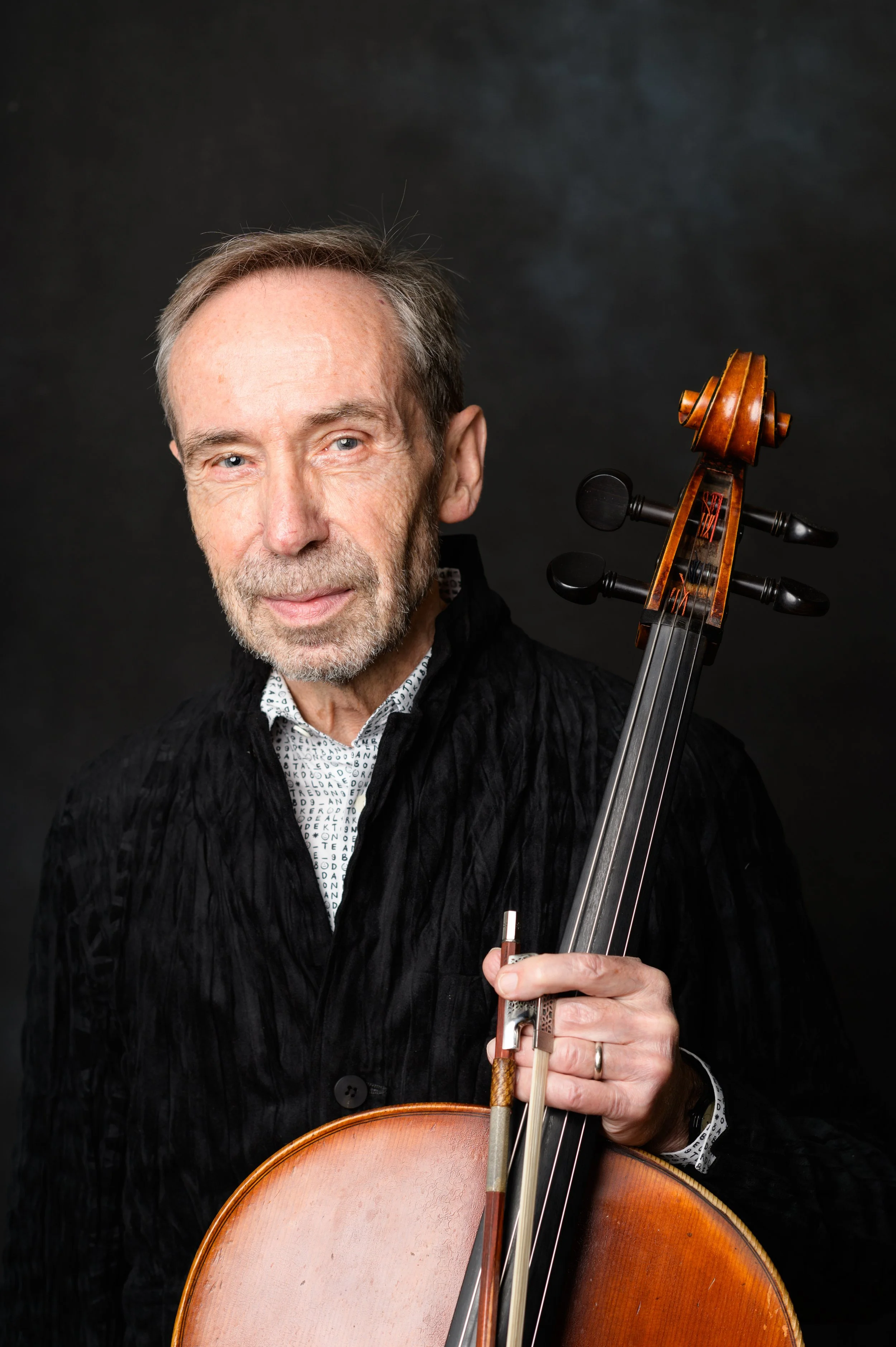
Philippe Muller
Born in Alsace, Philippe Muller was raised in both the French and German musical traditions that characterize that province. His early experiences opened his mind to varying cultures and lead him to a multi-faceted career. He performs and has recorded a wide range of repertoire, from the Bach Suites, through the music of living composers.
In 1970, Mr. Muller founded a Piano Trio with pianist Jacques Rouvier and Jean- Jacques Kantorow, violin, which was widely known to be one of Europe’s most venerated chamber music ensembles. He worked closely with Pierre Boulez’ Ensemble Intercontemporain, for seven years, giving him an understanding of and an affinity for the music of our time. He continues to be active in commissioning new cello works and premiers of new music and performs frequently as soloist and in various chamber music ensembles at festivals in Europe, the United States, Canada, Latin America, Japan, Korea, Australia and New Zealand.
Philippe Muller’s teaching career is legendary. He succeeded his mentor André Navarra as cello teacher at the Conservatoire de Paris in 1979, continues his teaching legacy today here in New York, at the Manhattan School of Music. Many cellists from his studio have gone on to major careers as soloists including Xavier Phillips and Gautier Capuçon. He travels often giving master-classes in the top conservatories across the globe and has spent twenty years teaching at the Academy of French Music in Kyoto, Japan.
Philippe Muller frequently serves on the juries of the major international cello competitions such as the Tchaikovsky in Moscow, Paulo in Helsinki and Rostropovitch in Paris.
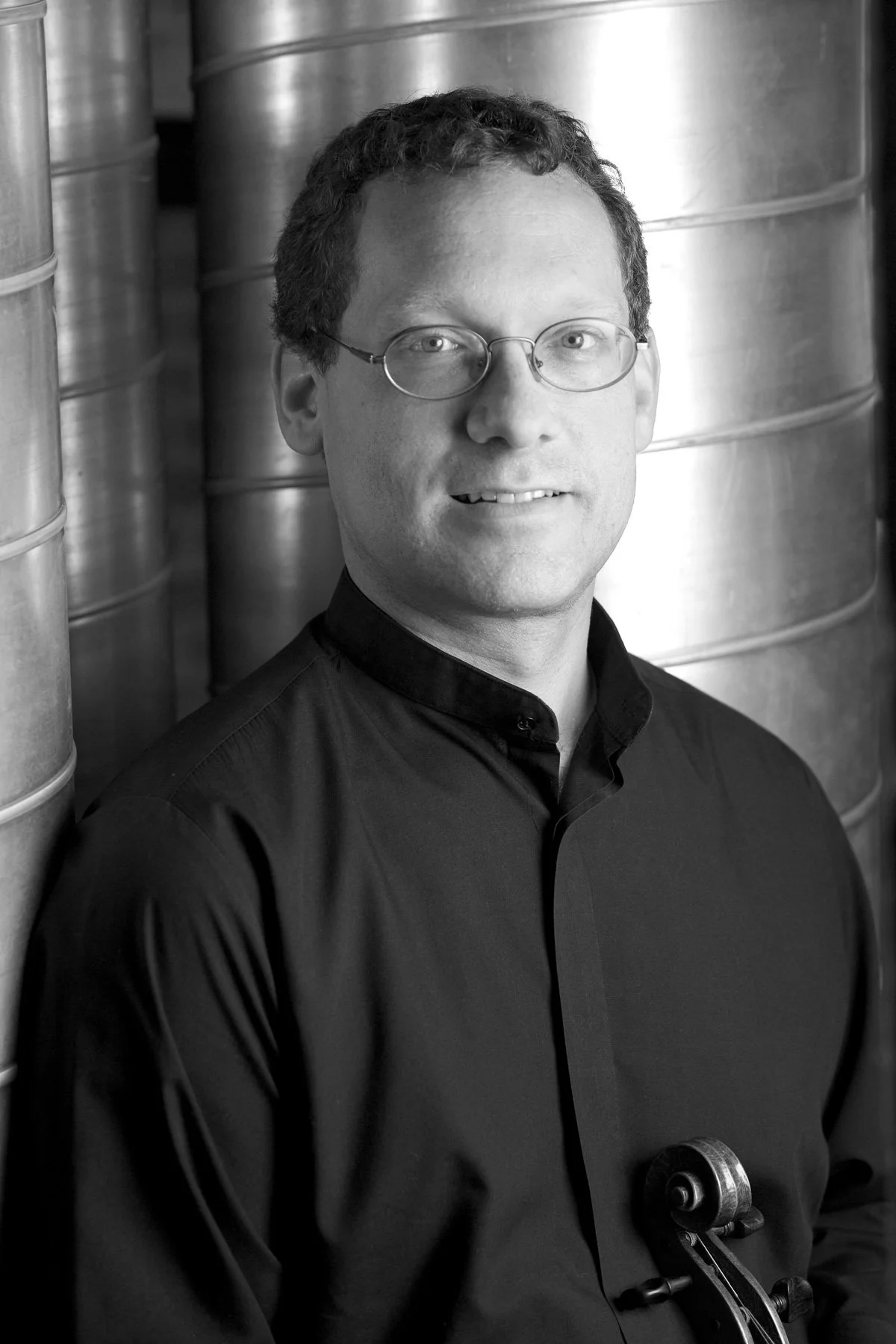
Daniel Panner
Daniel Panner enjoys a varied career as a performer and teacher. As violist of the Mendelssohn String Quartet, he concertized extensively throughout the United States and Israel. He has performed at numerous music festivals, including Marlboro, Ravinia, Tanglewood and Aspen, and he has collaborated with members of the Cleveland, Emerson, Guarneri and Juilliard String Quartets. As a member of the Whitman String Quartet, Mr. Panner received the 1998 Walter W. Naumburg Chamber Music Award and served as a teaching assistant to the Juilliard String Quartet for two years.
Mr. Panner is co-chair of the string department of the Mannes College of Music, where he also teaches viola and chamber music. He has also taught at the Juilliard School, Rutgers University, SUNY Stonybrook, Queens College, and the Jerusalem Music Center Summer Courses, and he has given master classes at such schools as Peabody, Hartt and the North Carolina School of the Arts. He has performed with the Chamber Music Society of Lincoln Center, the Metropolitan Opera Orchestra, the New York Philharmonic, and the Orchestra of St. Lukes; he has also toured with Musicians from Marlboro and the Orpheus Chamber Orchestra. As a guest artist, he has performed with the Juilliard String Quartet, the St. Lawrence String Quartet, the Daedelus String Quartet, the Flux String Quartet and the Moscow Conservatory Trio. Mr. Panner has been heard on National Public Radio's "Performance Today," both as a soloist and chamber musician. He has served as the principal violist of such orchestras as the New York City Opera and the Mostly Mozart Festival Orchestra. An active performer of new music, he is a member of Sequitur and the Locrian Ensemble and has performed as guest with such new-music groups as Speculum Musicae, the Da Capo Chamber Players, and Transit Circle; he has recorded solo viola works by Thea Musgrave and Victoria Bond, both for Albany Records. Mr. Panner studied with Jesse Levine at Yale University, where he earned a bachelor's degree in history. He continued his studies at the Curtis Institute of Music with Joseph dePasquale and the Juilliard School with Samuel Rhodes.
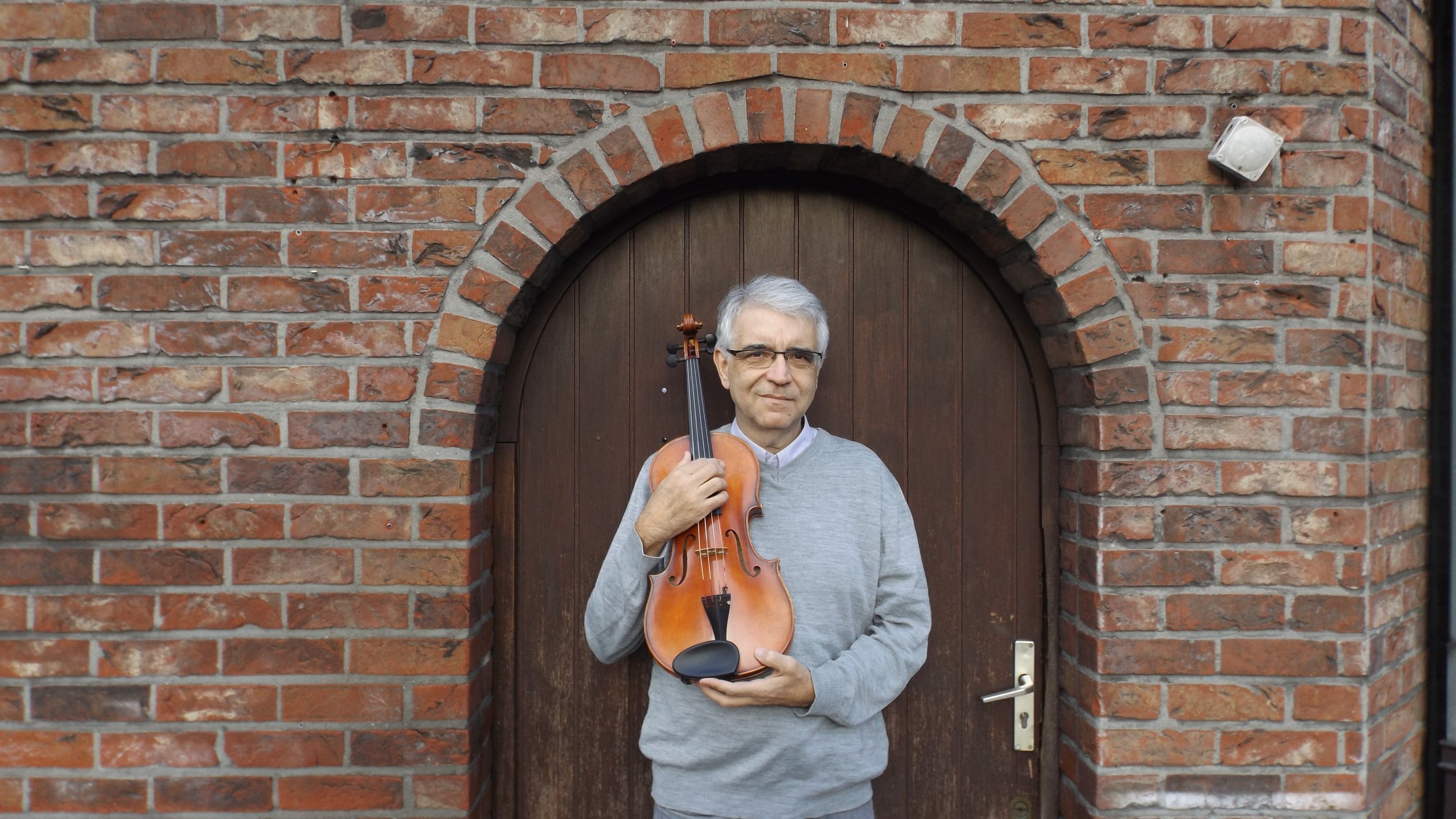
Pierre-Henri Xuereb
After receiving a first prize in viola in the Conservatoire in Avignon at the age of 13 he received a first prize in viola from the CNSm in Paris at the age of 16. After two years at the Juilliard school and 2 years at Boston University where his teachers are Walter Trampler ,Lillian Fuchs,the Juilliard Quartet ..;he becomes solo viola of the Ensemble Intercontemporain in Paris conducted by Pierre Boulez at the age of 19. He is in the winter of 1981 ,one of the last students of William Primrose (Provo-Utah).
Since then his international career has developed bringing him to many concert halls throughout the world :Lincoln Center,Wigmore Hall,Théatre des Champs Elysées,Teatro La Scala(Milano),Gulbenkian Foudation (Lisbon),Luzern Festival…
He has performed as a soloist with the Ensemble Instrumental de France ,Ensemble Intercontemporain,Ensemble Alternance ,Ensemble Contrechamps,Orchestre Symphonique de Tel Aviv,Israel Sinfonietta,Orchestre OLRAP,Orchestre Paca,Caracas Chamber Orchestra ,Victoria Symphony (Canada), Prussian Chamber Orchestra, Dusan Skovran Orchestra( Belgrade)…
He has given numerous world premieres from composers :K.Stockhausen, Klaus Huber, Philippe Hersant,J ean Michel Damase, Bruno Mantovani, Pjilippe Schoeller, Philippe Manoury, Heinz Holliger, Alessandro Solbiati , Joseph Vella , Edith Lejet…
He is regularly invited to give international masterclasses: in :Beijing,Kyoto,Gwangju(Korea)Tignes(Musicalp), Les Arcs,Fontainebleau, »Close Encounters… -Berkshires-USA »,Novisad,Malta, Domaine Forget (Canada)…
He is artistic director of the « Fête de l’alto « in Lasalle en Cevennes. He teaches viola in the :CNSM in Paris , Conservatoire Royal de musique de Liège and the CRD in Gennevilliers .
he has recorded over 70 records and recently recorded,under the direction of the composer , Vladimir Cosma’s Concerto for viola which was written for him.
He plays viola d’amore and appears regularly in concert and recordings with his wonderful instrument built by Michiel de Hoog in 1995 (copy of Stradivarius)
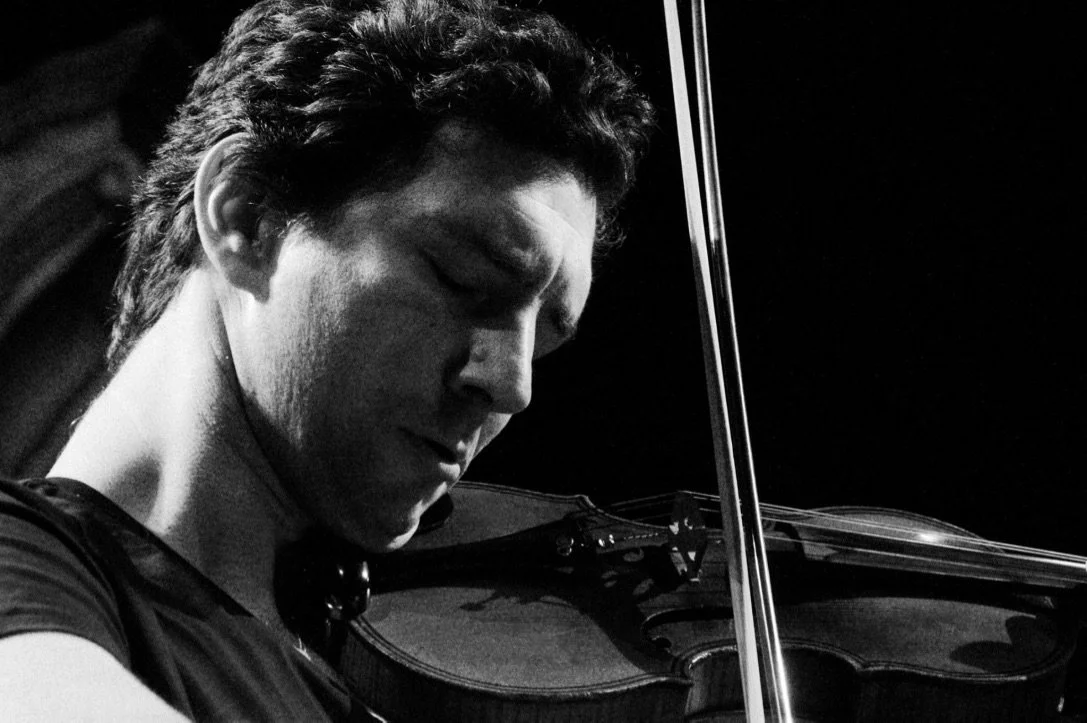
Max Zorin
Violinist Max Zorin enjoys a multifaceted career as a performer, educator, and artistic leader. Praised by The Strad for his “extremely compelling” interpretations and by Strings Magazine as “simply magnificent,” Zorin brings authenticity, nuance, and a dynamic sense of artistry to his performances.
His international career has taken him to leading venues across the United States, Europe, Asia, and South America, including Tchaikovsky Hall, Alice Tully Hall, Salle Molière, Odessa OperaTheatre, and the Henan Art Center in China. He performed with the Saint Petersburg State Orchestra, Odessa Philharmonic, Orchestre de Chambre de Lyon, Williamsport Symphony, Pennsylvania Chamber Orchestra, San Jose Youth Symphony. Summer festivals appearances include the Granada International Music Festival, Aspen Music Festival, Music Alp, collaborating with distinguished artists such as Maxim Vengerov, Itamar Golan, Henry, Demarquette, Romano Pallottini, Philippe Muller, and the Parker Quartet.
As an advocate for expanding the violin repertoire, Zorin premiered numerous works by contemporary composers and embraced collaborations beyond the classical realm. His critically acclaimed music video of Mack the Knife for violin and jazz trio earned him the Emerging Artist Award from the Global Music Awards. His upcoming album, Connections (Navona Records), reflects his commitment to diversity and innovation in programming, featuring works by underrepresented composers alongside a commissioned piece that bridges jazz and classical idioms.
A dedicated educator, Zorin serves as Associate Professor of Violin at Penn State University and has conducted masterclasses at prestigious institutions worldwide, including the Royal Academy of Music in London, Tel Aviv University, and NYU. As Artistic Director of Rencontres Musicales Internationales des Graves, a summer festival in Bordeaux, France, Zorin curates a unique fusion of masterclasses, performances, and cultural experiences, creating a harmonious celebration in the renowned wineries of Bordeaux.
Born in Israel to a family of musicians with roots in Odessa, Ukraine, Zorin moved to France at the age of five, where he grew up immersed in a rich musical environment. His father, Zacharia Zorin, an illustrious violinist, was among his principal teachers, alongside Dorothy DeLay, Naoko Tanaka, Peter Oundjian, and Ani Kavafian. At 17, Zorin won First Prize at the Corpus Christi International Competition before continuing his studies in the United States, earning degrees from The Juilliard School, Yale University, and a doctorate from Stony Brook University.
Zorin performs on a violin crafted by J.B. Vuillaume (Paris, c. 1850) and a bow by Edwin Clement (Paris, 2008)
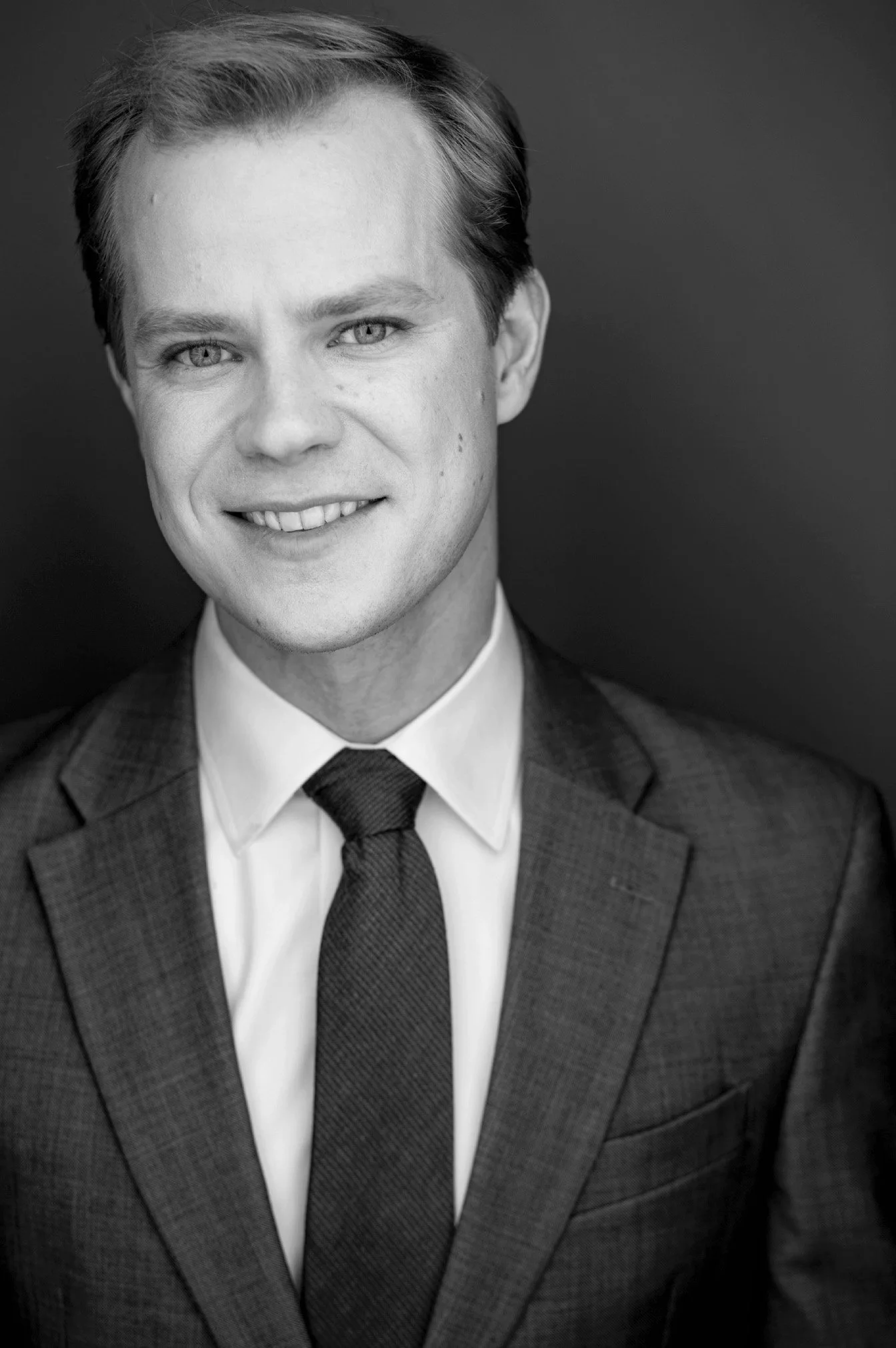
Samuel Adams
Samuel Adams is an NYC-based actor, director, and educator. Although a third-generation native of New York City, Sam was raised in a small farm-town upstate. He received his undergraduate education from the London Dramatic Academy and Adelphi University and his graduate degree from the George Washington University in collaboration with the Shakespeare Theater Company. He has worked as a director and an actor in films, television, and theaters across the nation, recently playing Mozart in Peter Schaffer’s celebrated play Amadeus at Folger Shakespeare Theatre and the titular character in Shakespeare's Henry V in at the Chesapeake Shakespeare Company. In addition to these pursuits, he has worked extensively as a teacher, arts-administrator, and gardener. Visit him on Youtube and Instagram at @TheUnweededGarden.
Program Notes
Wolfgang Amadeus Mozart (1756-1791)
The composer was in dire financial straits in 1788, and he wrote (not for the first time) to his fellow Freemason Michael Puchberg asking for a loan; by way of repayment, Mozart dedicated the Divertimento, K. 563, to Puchberg. Despite its modest instrumentation, the work received its premiere at a public concert, April 13, 1789, in Dresden. Mozart himself played his favorite instrument, the viola.
The sequence of movements was typical for such a “diverting” work, with an opening fast movement matched by a similar one to conclude, and a pair of slow movements plus two minuets sandwiched in between. In addition to the richness of his thematic materials, Mozart was clever enough to diversify his musical methods, writing one slow movement in sonata form, the other as a theme and variations. His minuets also exhibited differing structures, including an extra trio section for one of them. Analysis of such a masterpiece would be superfluous
Simple means, employed to glorious effect, resulted in this extraordinary work from the pen of a 31-year-old genius who would be dead at the age of 35. He had composed his last three symphonies (No. 39 in the same key, E-flat; No. 40 in G minor; and No. 41 in C major, the “Jupiter”) in the three months prior, but his depressed circumstances would preclude any further composition for some nine months.
In his earlier years, Mozart had produced a wide assortment of works with such interchangeable titles as Cassation, Notturno, Serenade, and Divertimento, some scored for wind ensemble, some for strings, some for orchestra, including charming but insignificant works as well as celebrated gems such as the Gran Partita for Winds, Eine kleine Nachtmusik, and the “Posthorn” Serenade.
In the more serious chamber music genres, Mozart had composed an extended collection of works for string quartet, and he wrote a masterful series of string quintets, but the Divertimento was his first and only music for string trio. Mingling the intimacy of forces with an abundance of invention, he produced his longest chamber work, and yet avoided any potential tedium by varying the tempos and the formal structures of the six movements.
Carl Stamitz ( 1745-1801)
Carl Stamitz's Variations for Viola d'Amore and Violin is a movement, specifically the finale from a sonata for the same instrumentation. This particular movement is known as the "Marlborough Variations" and is a popular piece among viola d'amore players.
Carl Stamitz (1745–1801), a German composer and a virtuoso on the violin, viola, and viola d'amore, was a prominent figure of the Mannheim School. The work is for viola d'amore with violin accompaniment. The viola d'amore is a unique instrument featuring sympathetic strings that resonate without being bowed.
The variations are based on the popular French tune "Marlbrouck s'en va t'en guerre" ("Marlborough Has Gone to War"), which refers to John Churchill, the first Duke of Marlborough, a general in the War of the Spanish Succession (1702–1714).
- Yibin Li
Wolfgang Amadeus Mozart (1756-1791)
Mozart reaches his most breathtaking peaks of chamber-music inspiration in his late works for five instruments, the four quintets for strings, K. 515, K. 516, K. 593, and the generally underrated K. 614, all scored for string quartet with a second viola, and the Quintet for clarinet and string quartet, K. 581.
The notion of a string quintet with two violas was new in the 1760s, when Mozart wrote his first such work, under the influence of Michael Haydn, creator of the first music of (relative) substance for this somewhat daring combination of instruments: daring simply because the taste of the age demanded thinner, leaner textures and if, as in Boccherini’s quintets with two cellos rather than two violas), the quartet ensemble was expanded it did not mean greater individual freedom for the instruments, but even less, with only the first violin and first cello bearing marked solo responsibilities.
After hearing in March of 1773 Michael Haydn’s first string quintet (in C), the 16-year-old Mozart took own first plunge into these barely-charted waters with his Quintet in B-flat, K. 174 – hardly music to stand with the mature masterpieces, but a work of some consequence, with a slow movement of great expressive appeal. That Mozart took the work seriously is evidenced by the fact that he rewrote its last two movements after a two-month long stay in Vienna, where he had been hugely impressed by the latest quartets of another Haydn, Michael’s older brother Joseph.
No concrete evidence exists as to the occasion(s) for which Mozart wrote the three string quintets of 1787, K. 515, K. 516 and K. 406/K. 516B, the last an arrangement of his Wind Octet, K. 388. The general feeling is that the composer wrote them on speculation, “hoping to sell manuscript copies to amateurs by subscription,” according to H.C. Robbins Landon.
It is known that Mozart and his friends played them for their own diversion, but what happened after that remains a mystery. These were by no means the first large-scale works that Mozart had created on spec, but unlike the piano concertos of 1783 (works of similar provenance), which were quickly sold, the quintets were hardly snapped up by the amateurs, who under any circumstances would have found them technically daunting. The composer was neither consciously catering to Vienna’s aristocratic salons nor being courted by them as the year 1787 waned. Thus, he was finally forced to sell them for a pittance to the publisher Artaria and Co.
As Charles Rosen has pointed out, Mozart turned to the quintet after having immersed himself in quartet-writing – “always directly after having written a series of quartets, as if the experience of composing for only four instruments prompted him to take up the richer medium.” So it was in 1773, and again in the 1780s, after he had composed his six quartets dedicated to Haydn and perhaps the grandest of his own quartets, the work in D, K. 499, completed in August of 1786.
The opening of K. 515, as the cello dances upward through the light accompaniment of its fellows, recalls the opening of Haydn’s “Bird” Quartet (Op. 33, No. 3), but thereafter the tone and texture are entirely Mozartian: the uniquely rich and mellow texture he created by emphasizing the inner voices (here, the two violas) that had been regarded as unnecessary “thickening” elements, even rude, by 18th-century listeners.
Rosen further notes, of K. 515’s opening, that after that mounting cello phrase, there is “the same inner accompanying motion, the same [as in Haydn’s “Bird”] placing of the first violin. Yet Haydn’s nervous rhythm is avoided: in place of his independent six-measure phrases – the motion broken abruptly between them – Mozart has a linked series of five-measure phrases with absolutely uninterrupted continuity.”
The slow movement is one of Mozart’s seemingly effortless heartbreakers – in essence a dialogue between first violin and first viola. The minuet is elegant but by no means lightweight, with a chromatically-tinged trio of grand proportions. The finale is a jubilant, elegant sublimation of feeling of the finest and strongest sort by a man who while yet only 30 years old was in the process of being discarded by those who had so recently set him on a pedestal.
— Herbert Glass, after many years as a columnist for the Los Angeles Times, has for the past decade been the English-language annotator and editor for the Salzburg Festival.
We need your help
Your contributions are essential to our mission of reaching more people with the extraordinary experience of live chamber music.
Thank you for making it happen.
OneMusic Project acknowledges the generous support of the following individuals for their time, gifts, and financial support. With their help, we are able to realize our mission of bringing great artists from Europe and the USA together to perform in our community.
Please join our partnership today by giving to OneMusic Project today!
OneMusic Project is grateful for support from
James & Susan Aisenberg
Veronique Brossier
Chu Family Foundation
Dan Kainen & Karen Dorst
Robert & Nina Kaufelt
Loube-Li Family
Philippe Muller
Alexander Ommaya
The Morris and Alma Schapiro Fund
Robert Spitzer
Richard Holley
Susanne & Frank Hugus
Wei Family
Joseph Towbin
Individual Contributors
Brian Loube
Ellen Oppenheim
Betsy Mulberry
Zoe Lo
Liza Loube
Ben Young
Eric Sandell
Jeff Vock